
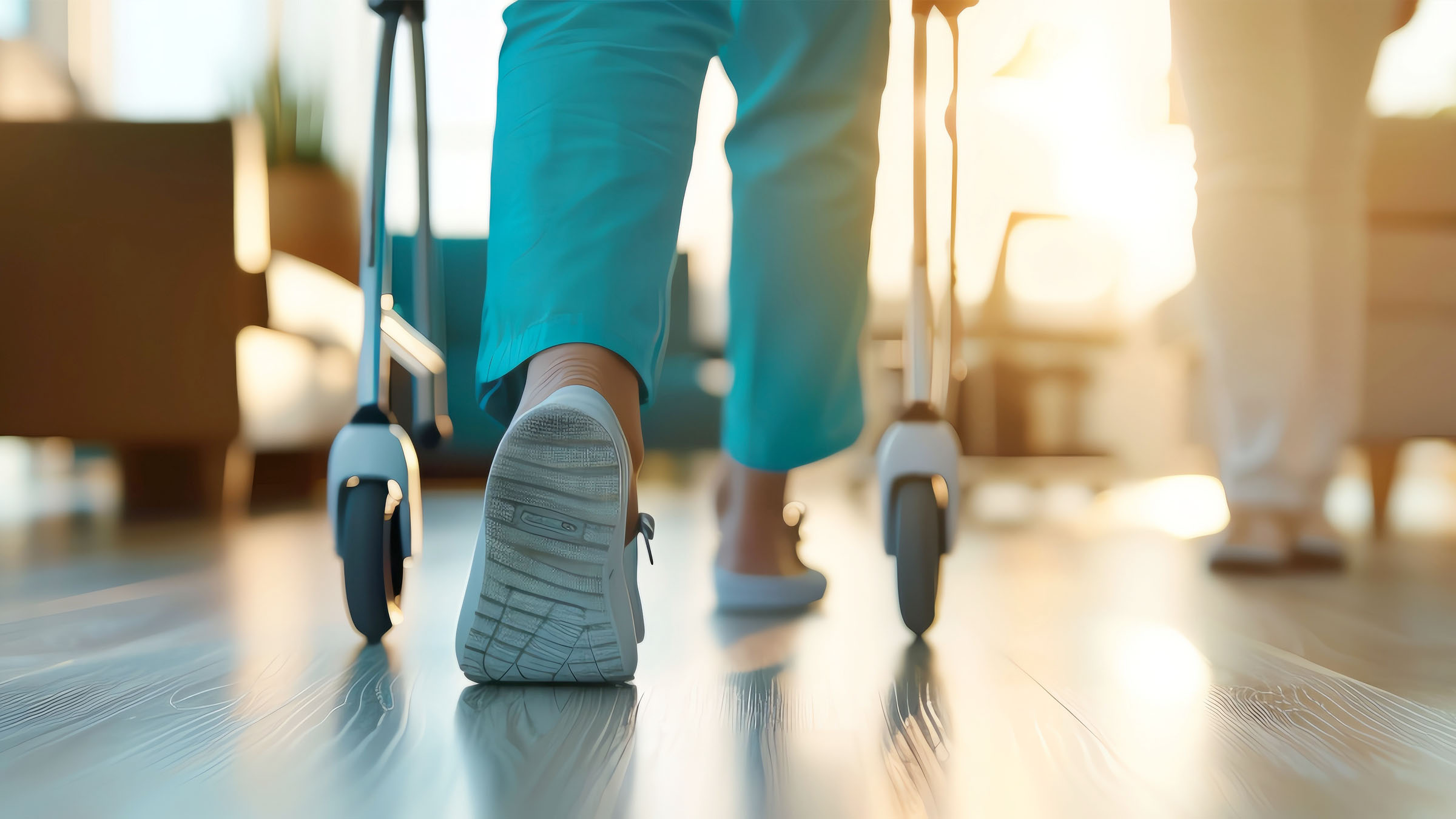
Falls Across the Aging Continuum: A Persistent Systemic Risk Hiding in Plain Sight
Falls among older adults are often framed as isolated accidents—unfortunate events attributed to age, bad luck, or momentary lapses in attention.
In reality, falls represent one of the most persistent and under-recognized systemic risks across the entire aging lifecycle, following individuals from independent living at home through assisted living, skilled nursing, and beyond.
Despite their prevalence and impact, fall prevention remains largely reactive, episodic, and fragmented across care settings. The consequences of this gap are both human and economic—and they compound quickly.
The Scale of the Problem Is Larger Than Most Assume
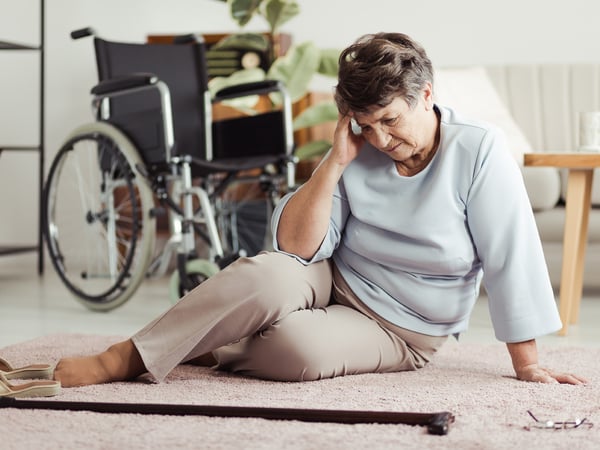 According to the Centers for Disease Control and Prevention (CDC), approximately one in four adults age 65 and older experiences a fall each year.1 Many of these falls occur in environments individuals believe are safe—most commonly, their own homes.
Falls are also the leading cause of injury-related hospitalizations and injury-related deaths among older adults in the United States.
In 2021, more than 38,700 adults aged 65 and older died from unintentional falls, a figure that has continued to rise, exceeding 41,000 deaths in provisional 2023 data.2
These are not isolated statistics. They reflect a sustained and escalating trend that cuts across geography, care models, and living arrangements.
Falls Do Not Belong to a Single Care Setting
One of the most persistent misconceptions in how fall risk is addressed is the belief that it is location-specific. It is not. Fall risk follows individuals across the continuum of care, often intensifying as health status, medication regimens, and environmental complexity evolve.
–– Aging in Place and Independent Living
Most older adults express a strong preference to remain at home for as long as possible. Yet many falls occur precisely in these familiar environments. Common contributing factors include subtle mobility and balance changes, environmental hazards, delayed engagement of support systems, overconfidence rooted in years of independence, and medication management complexity.
As individuals age, medication regimens evolve. Side effects such as dizziness, orthostatic hypotension, fatigue, and impaired alertness can quietly increase fall risk.
–– Assisted Living and Senior Communities
Transitioning into assisted living does not eliminate fall risk. Residents often arrive with multiple chronic conditions and increasingly complex medication profiles.
–– Skilled Nursing and Memory Care
In higher-acuity environments, fall risk is compounded by cognitive impairment, medical complexity, and polypharmacy.
Why the Current Approach Falls Short
Across settings, the prevailing model of fall management is episodic and event-driven, producing predictable downstream consequences.
Reframing Falls as a Lifecycle Risk
Falls must be understood as a longitudinal challenge requiring proactive, continuous assessment. Falls follow older adults wherever they live. Recognizing falls as a persistent, system-level risk across the aging lifecycle is the first step toward better outcomes.
Footnotes:
-
Centers for Disease Control and Prevention. Older Adult Falls: Data and Statistics.
-
Centers for Disease Control and Prevention. About Older Adult Falls; National Vital Statistics Reports; Provisional 2023

 About Supply Chain Butler